Vectorless RAG Explained: Beyond Embeddings and Vector Databases
Artificial Intelligence practitioners often assume that Retrieval Augmented Generation (RAG) automatically means chunking documents, embedding them, and storing them in a vector database. That assumption is understandable but technically incomplete. RAG fundamentally means augmenting a language model with retrieved external knowledge before generating an answer. The retrieval mechanism does not have to rely on embeddings or vector similarity.
Recently, approaches often described by their authors and maintainers as vectorless RAG have gained attention. The label is useful industry shorthand, not a single standardized architecture. These systems avoid dense-vector similarity as their primary retrieval mechanism and may instead use lexical search, document hierarchy, metadata, symbolic queries, or reasoning-guided traversal. This article explains what vectorless RAG actually means, why it is being explored, and when it makes sense compared to traditional vector-based RAG.
What Is Retrieval Augmented Generation (RAG)?
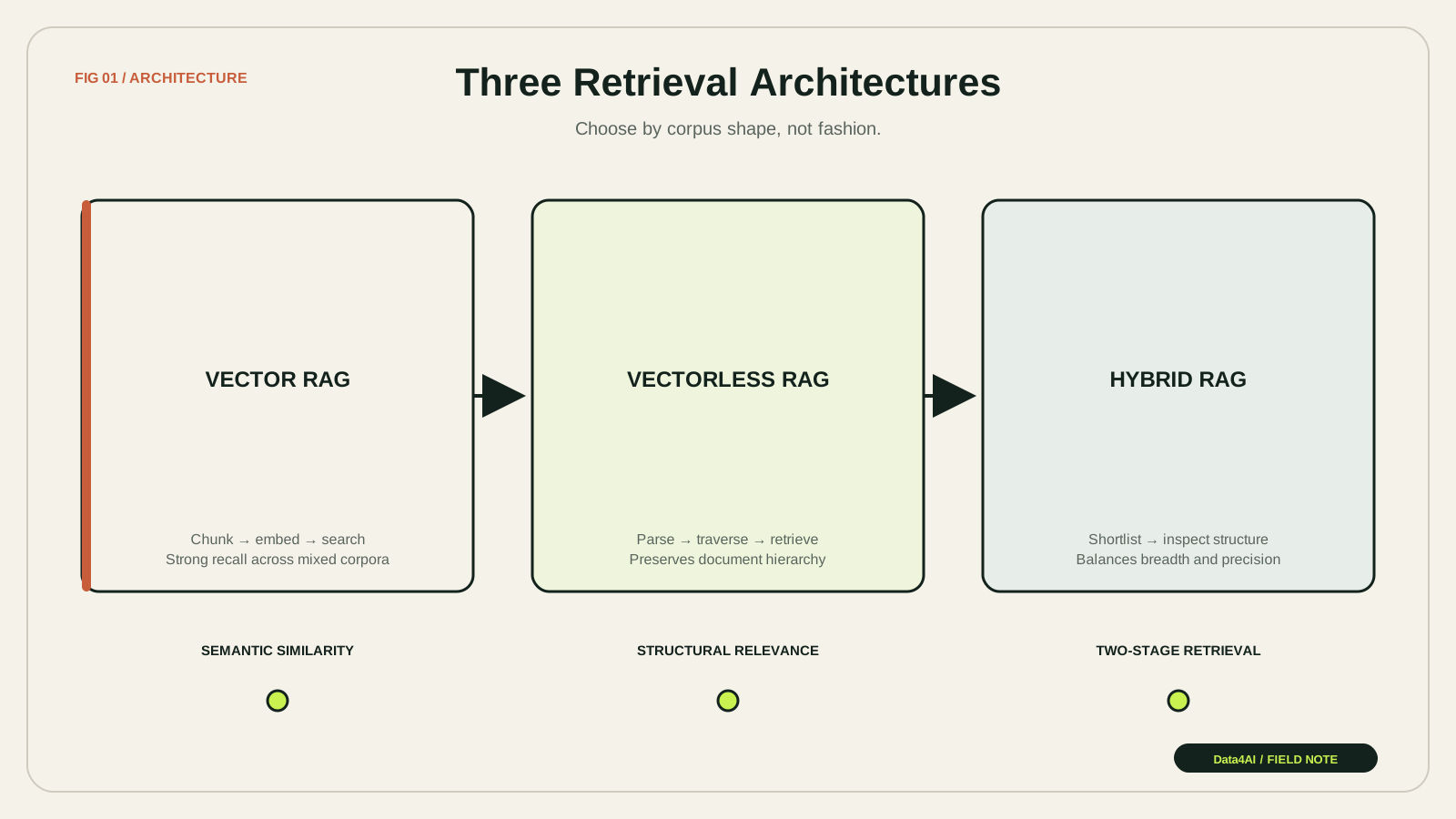
Retrieval Augmented Generation was introduced in the 2020 research paper:
Retrieval-Augmented Generation for Knowledge-Intensive NLP Tasks
Patrick Lewis et al., Facebook AI Research
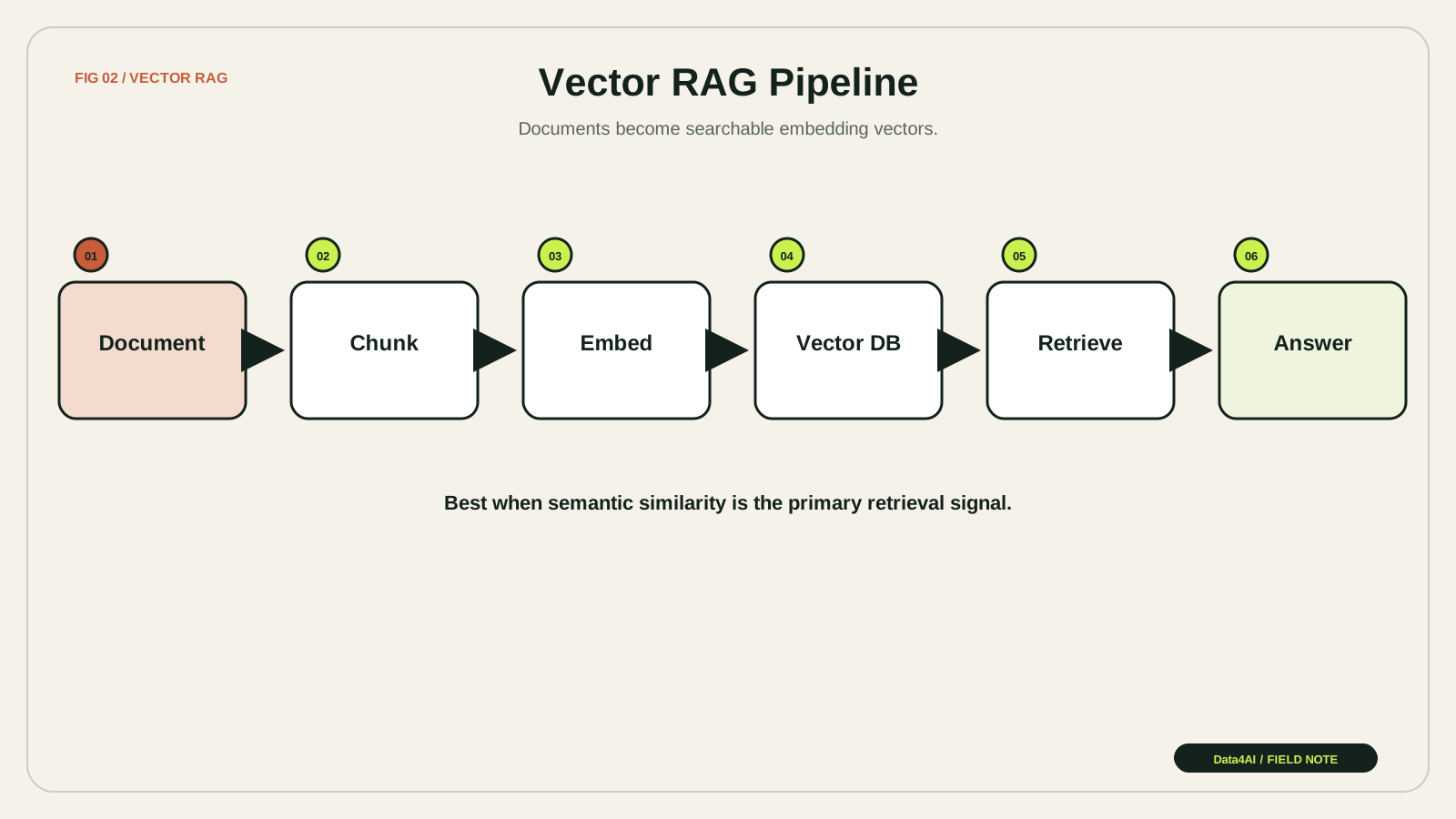
The idea is simple. Instead of relying entirely on the parameters of a language model, the system retrieves relevant external documents and provides them to the model as context before generating an answer. The typical pipeline looks like this:
- Documents are split into chunks
- Each chunk is converted into an embedding
- Embeddings are stored in a vector database
- At query time the system retrieves the most similar chunks
- The language model generates an answer grounded in the retrieved text
This architecture became the dominant RAG implementation pattern, especially with the rise of vector databases such as Pinecone, Weaviate, Milvus, and FAISS.
However, vector search is only one possible retrieval strategy.
Why Traditional Vector RAG Became Popular
Vector RAG became the default approach because it solves several difficult problems. Semantic embeddings allow systems to retrieve documents even when the wording of the query and the document are different. For example:
Query
"How do I reset my password?"
Document text
"Steps for credential recovery"
A vector embedding can still match these semantically similar phrases. Vector search also scales well across very large corpora of documents. Because of these advantages, vector-based retrieval quickly became the backbone of many production AI systems. However, this approach also introduces limitations.
The Limitations of Vector-Based RAG
Vector RAG pipelines often rely on fixed-size chunking. This creates several problems.
Chunk boundaries can destroy context
Large documents such as financial filings, legal agreements, or technical manuals contain carefully organized sections. When those documents are broken into arbitrary chunks, critical context may be lost. For example, a chunk may include: “...risk disclosures related to international operations...” But the heading explaining the context may appear in another chunk.
Semantic similarity is not always relevance
Vector similarity retrieves text that is semantically similar to the query. But similarity does not always equal correctness. For example, a financial question about: “Deferred tax assets in the risk disclosure section” May retrieve a chunk about taxes in a different context simply because the words are similar.
Lack of interpretability
Vector retrieval can be difficult to explain. Why was this chunk retrieved?
Because it was close in embedding space. For enterprise use cases that require auditability, this explanation is often insufficient.
What Is Vectorless RAG?
Vectorless RAG refers to retrieval pipelines that do not rely on embeddings or vector databases.
Instead, they retrieve information using alternative strategies such as:
- lexical search (BM25 or full-text search)
- document structure and hierarchy
- metadata filtering
- symbolic queries
- LLM-guided search through document trees
In other words, the system retrieves knowledge without performing vector similarity search.
The final generation step can still use retrieved content as model context, but some vectorless systems also use an LLM during retrieval itself. That makes the boundary between retrieval and generation less rigid than this simplified pipeline suggests.
A Simple Example of Vectorless RAG
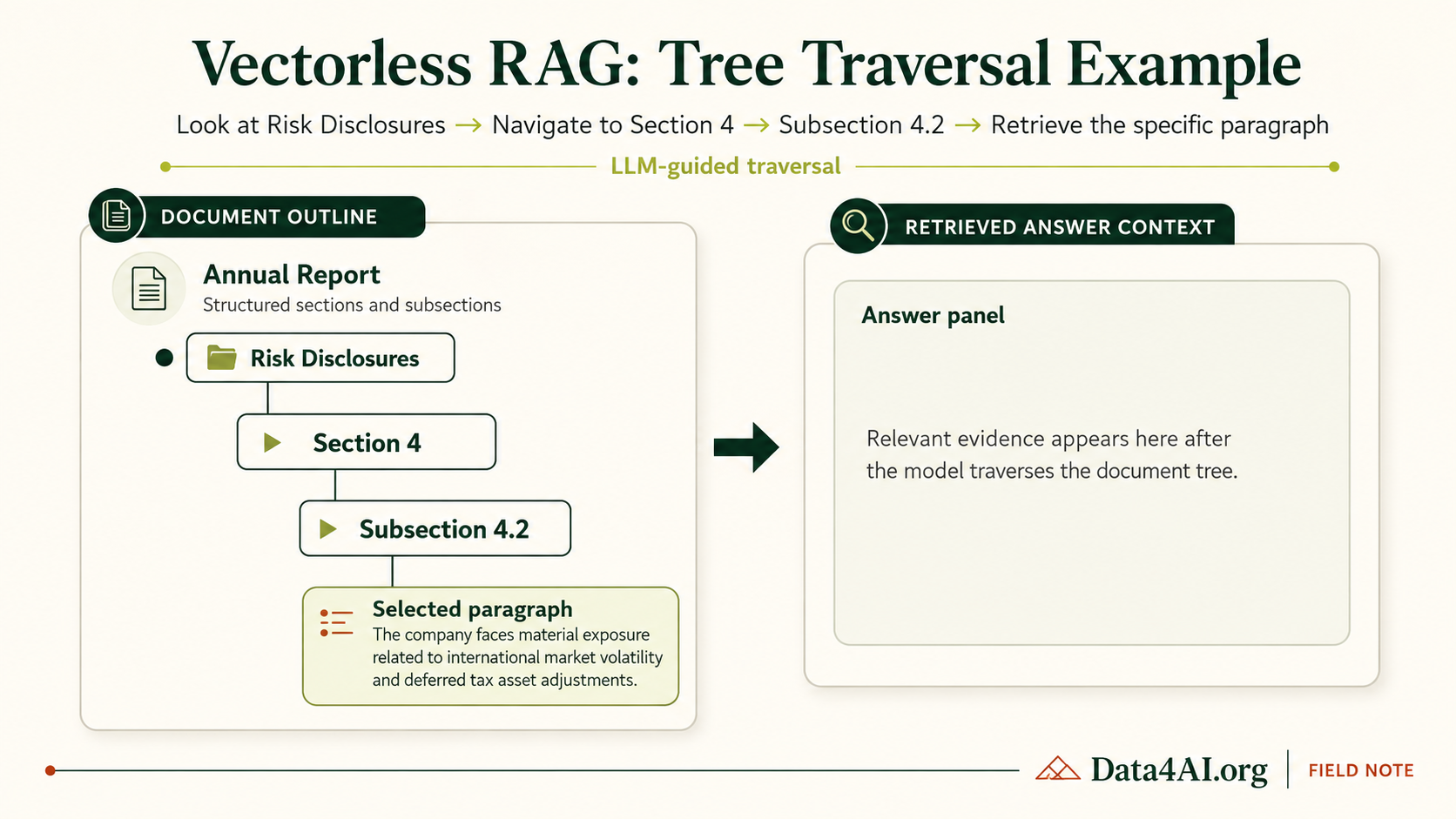
Consider a 200-page financial report.
A vector RAG pipeline might:
- Split the document into 1,000 chunks
- Embed each chunk
- Search the embeddings
A vectorless pipeline might instead:
- Parse the document structure
- Build a hierarchy of sections and subsections
- Allow the model to traverse that hierarchy
This approach behaves more like a human analyst navigating a document rather than searching for semantically similar chunks.
Research on Embedding-Free Retrieval
Several recent projects explore this idea.
ELITE: Embedding-Less Retrieval with Iterative Text Exploration
ELITE proposes embedding-free retrieval through iterative search-space refinement guided by an importance measure, followed by expansion with logically related information. The paper reports results on long-context question-answering benchmarks, including NovelQA and Marathon. ELITE should not be reduced to document-tree navigation; its contribution is a broader iterative text-exploration method.
Research paper: ELITE: Embedding-Less Retrieval with Iterative Text Exploration
GitHub repository
PageIndex
PageIndex is an open-source project that describes itself as a vectorless, reasoning-based RAG system. It converts long documents into a hierarchical tree with page references and optional summaries, then exposes that structure and page content to a reasoning process. Its repository notes that single-document retrieval is the default and documents separate routing patterns for multi-document search.
TreeSearch
TreeSearch is a 2026 open-source implementation that parses heading hierarchies and uses SQLite FTS5 lexical scoring rather than embeddings. It preserves parent-child document structure, but its published repository—not a peer-reviewed evaluation—is the source for its performance and design claims.
When Vectorless RAG Works Best
Vectorless RAG is particularly useful for structured documents. Examples include:
- financial filings
- legal contracts
- policy manuals
- technical specifications
- compliance documents
- research papers
These documents contain natural structure that can be leveraged for retrieval. Benefits include:
- better preservation of context
- more interpretable retrieval paths
- improved reasoning over long documents
When Vector RAG Is Still Better
Vector search remains extremely powerful for other scenarios. Vector RAG works best when:
- the corpus contains many small documents
- documents lack strong structure
- queries require semantic matching
- large-scale document search is required
For example:
- customer support knowledge bases
- chat logs
- product documentation
- heterogeneous enterprise datasets
Vector search excels at finding relevant documents quickly across large collections.
Hybrid retrieval: a practical production pattern
Production systems can combine retrieval strategies rather than relying on only one. Hybrid designs are useful when an application needs both broad corpus discovery and precise navigation inside a selected document; the appropriate design still depends on corpus structure, latency, cost, evaluation results, and operational constraints.
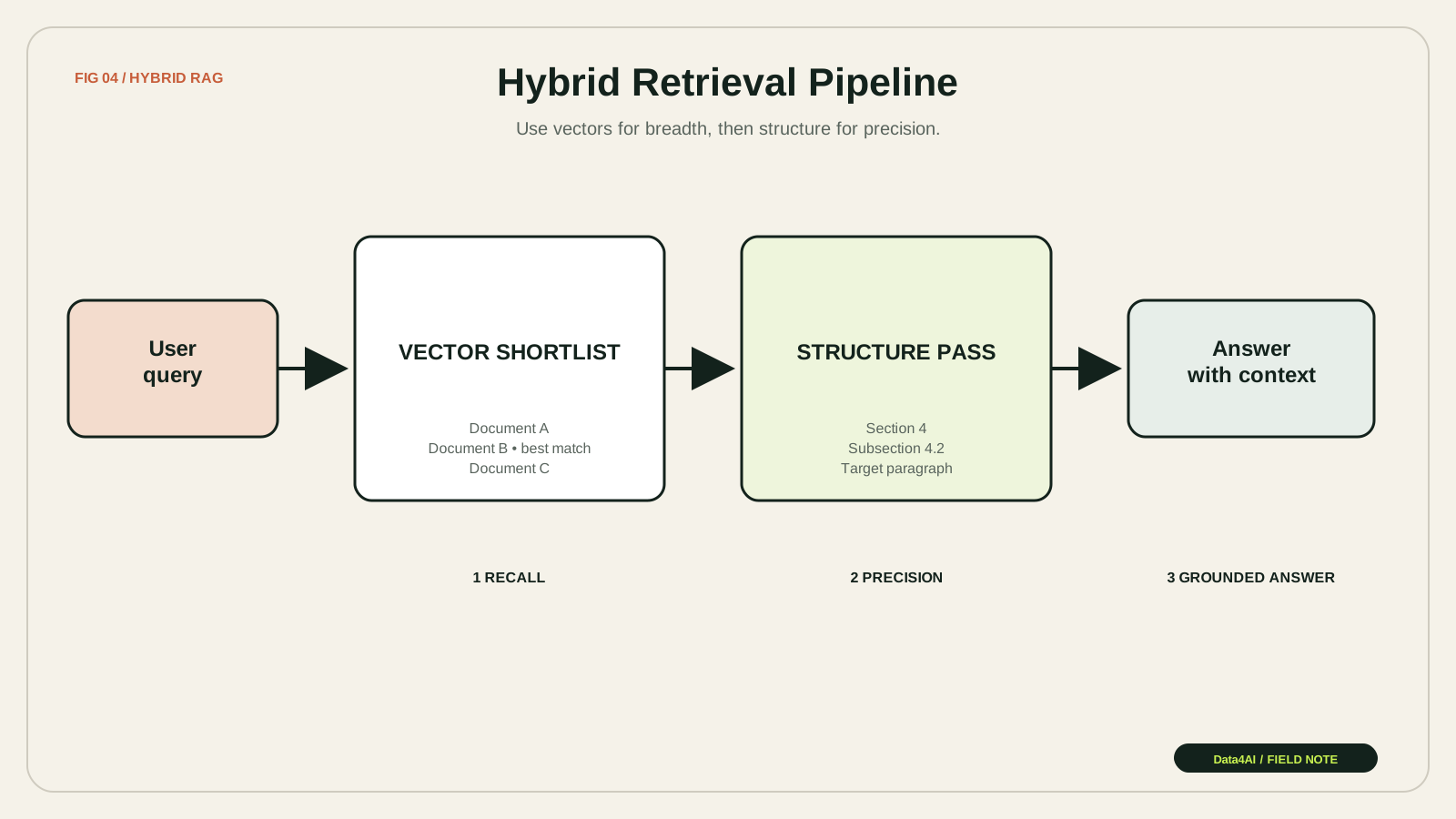
One possible two-stage architecture is:
- Vector search identifies candidate documents
- Structure-aware retrieval identifies the precise section
- The language model generates the final answer
This hybrid approach combines the strengths of both methods.
Vector search provides high recall, while structured retrieval provides precision and interpretability.
Choosing the Right RAG Architecture
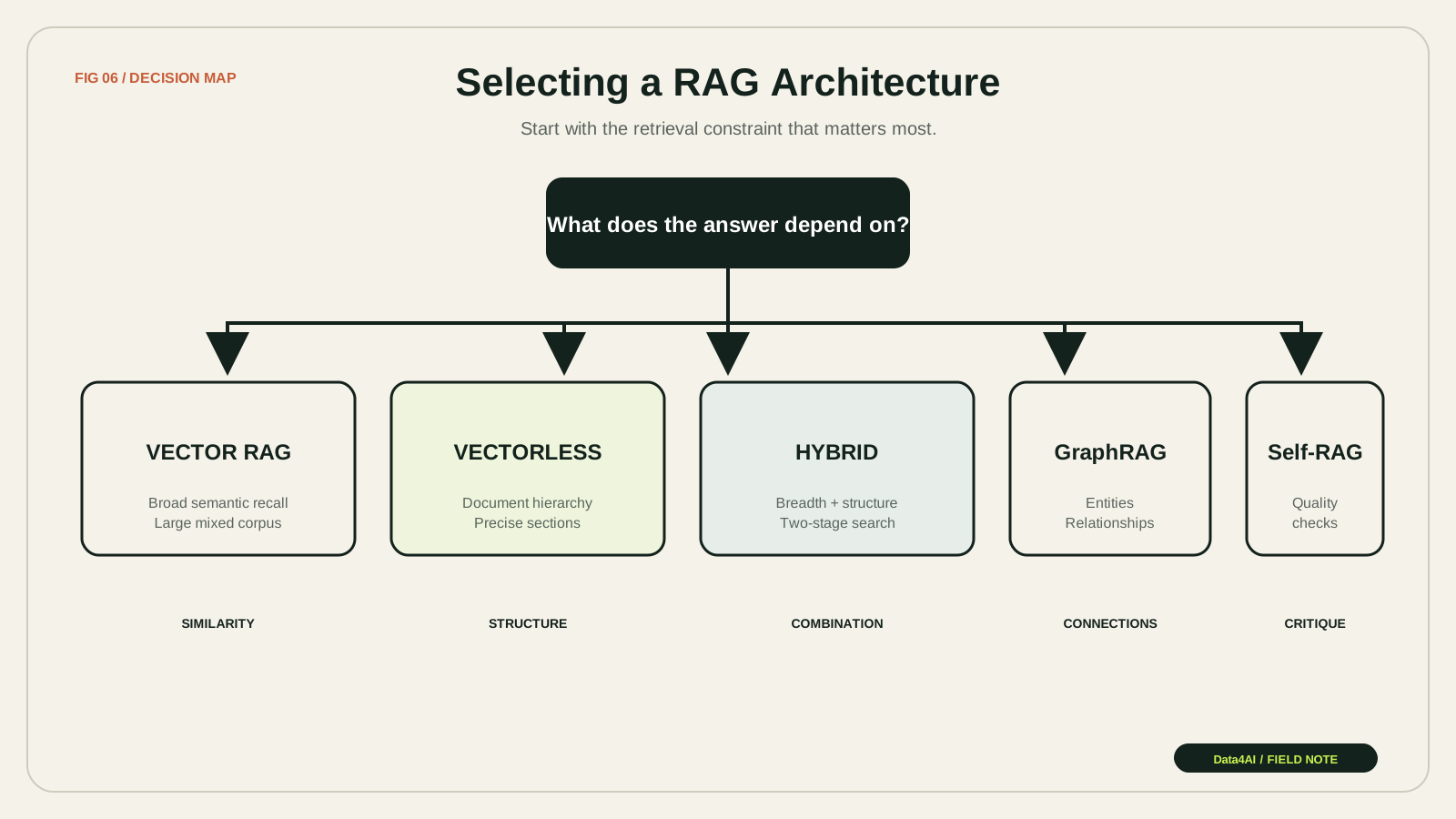
Selecting the right approach depends on several factors.
| Scenario | Recommended Architecture |
|---|---|
| Large corpus of short documents | Vector RAG |
| Highly structured long documents | Vectorless or Tree RAG |
| Enterprise search across many systems | Hybrid RAG |
| Keyword-driven retrieval | Sparse retrieval |
The key insight is that retrieval strategy should match the structure of the knowledge base.
The Future of Retrieval Architectures
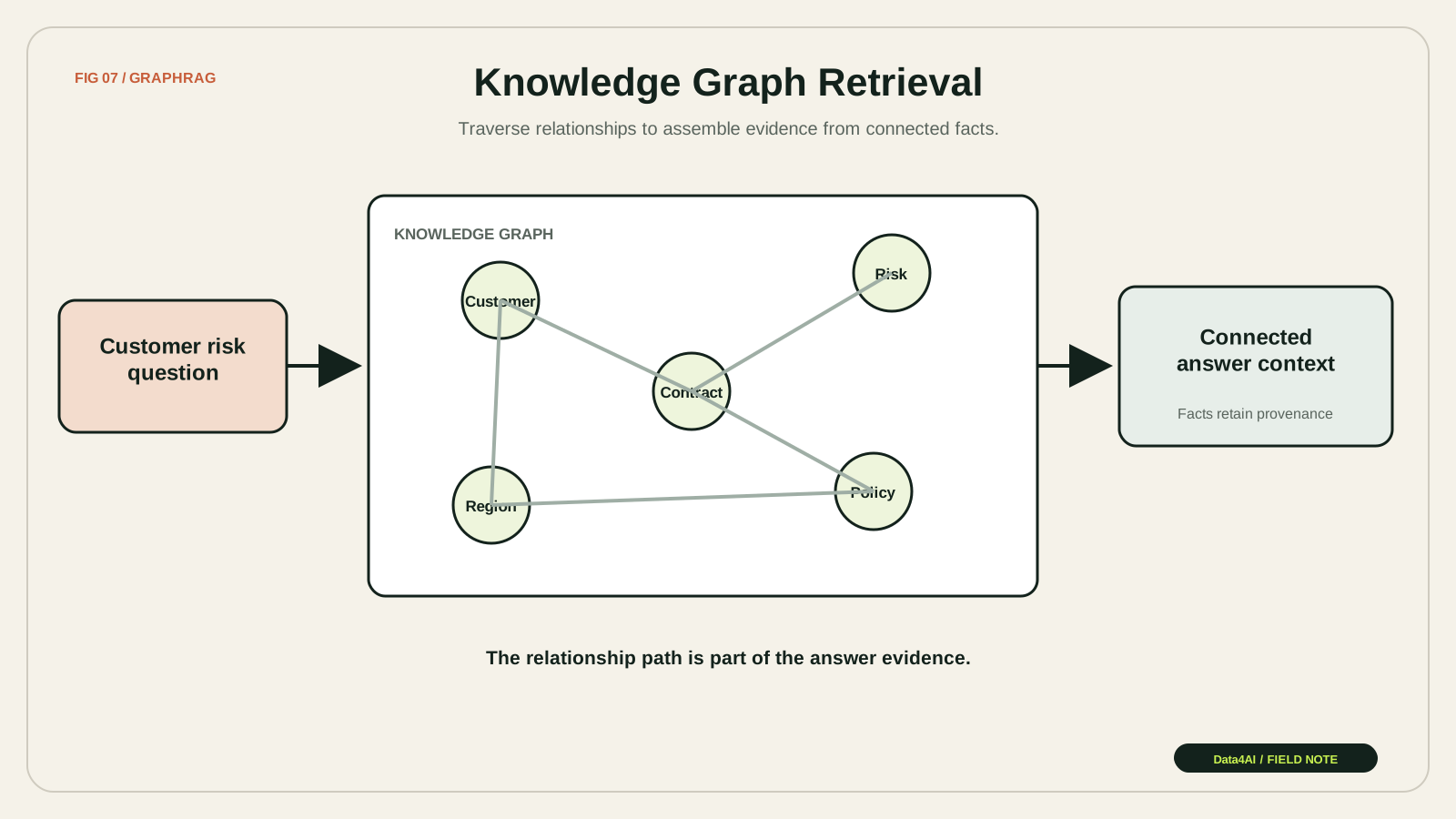
Graph-based RAG can retrieve through entities and relationships represented in a graph. Implementations vary: some use graphs for corpus organization or community summaries, while others traverse explicit knowledge-graph edges. “GraphRAG” therefore describes a family of designs rather than one fixed pipeline.
The debate between vector RAG and vectorless RAG should not be viewed as a competition. Instead, it reflects a broader evolution in how AI systems retrieve knowledge. A plausible direction is to combine retrieval methods and select among them using the query, corpus structure, evaluation evidence, latency targets, and cost constraints. This includes:
- dense vector retrieval
- sparse lexical search
- graph traversal
- structured document navigation
- agent-driven retrieval pipelines
This remains a design direction rather than a settled industry standard: teams should evaluate retrieval quality on their own corpus instead of assuming one architecture will dominate.
As language models become more capable at reasoning, retrieval systems will increasingly resemble intelligent navigation systems rather than static search engines.
Final Thoughts
Vectorless RAG reminds us that retrieval is not synonymous with vector search. Vector databases solved many problems in semantic retrieval, but they are not the only way to augment language models with external knowledge. In domains where document structure matters, alternative retrieval methods can sometimes produce more reliable and interpretable results. The most effective systems will not choose between vector and vectorless approaches. They will combine them.
References
- Lewis, Patrick et al. Retrieval-Augmented Generation for Knowledge-Intensive NLP Tasks
- Karpukhin, Vladimir et al.: Dense Passage Retrieval for Open-Domain Question Answering
- ELITE: Embedding-Less Retrieval with Iterative Text Exploration
- FinanceBench: A New Benchmark for Financial Question Answering — benchmark reference; it does not by itself validate every vectorless implementation.
- PageIndex Repository
- TreeSearch Repository
Fact-check record
Reviewed September 3, 2026. Definitions and project descriptions were checked against the original RAG and ELITE papers and the current PageIndex and TreeSearch repositories. Vendor and repository claims are identified as such; architecture recommendations are framed as design choices that require corpus-specific evaluation.

Historical comments from Datanizant
No public comments on this article
6 imported entries withheld from public display after manual spam and duplicate review. The source archive remains unchanged.